Early Birds vs Night Owls: Can Your Pillow Help Reset Your Body Clock?

We’re all trying to find balance between being an “early bird” and a “night owl.” Some people wake up with the sunrise full of energy, while others don’t get their creative spark until midnight. The problem is, modern life doesn’t always match our natural rhythm—early birds might have to stay up late for work, and night owls are often forced to wake up early.
So here’s the question: Can your sleep environment—especially your pillow—actually help reset your body clock?
1. The Tug-of-War Between Your Body Clock and Sleep
Perks of early birds: Consistent routines, higher efficiency, and better alignment with society’s schedule.
Struggles of night owls: Late nights lead not only to dark circles but also to a constant sense of being “out of sync.”
Core issue: It’s not about who’s right or wrong—it’s about the conflict between your internal body clock and the external pace of life.
Which means, if you want to reset your routine, simply “setting an alarm” won’t work. You also need to adjust sleep quality and your sleep environment.
2. Does Your Pillow Really Affect Your Body Clock?
Sounds surprising, but the answer is: yes, in a way.
Sleep position stability: A supportive pillow (like a memory foam pillow) helps you fall into deep sleep faster.
Sleep continuity: Your body clock thrives on consistent, high-quality sleep—not fragmented naps. The right pillow reduces tossing and turning.
Relaxation signal: When lying down instantly feels relaxing, your body starts forming a “bedtime signal,” which is key for shifting your body clock.
In short, your pillow doesn’t directly reset your circadian rhythm, but it creates the right environment to make that adjustment easier.
3. Early Birds vs Night Owls: What Kind of Pillow Do You Need?
Early birds need:
Neck support to avoid stiffness in the morning.
Deep sleep quality—even if the sleep duration is shorter.
Night owls need:
A pillow that helps them fall asleep faster instead of lying awake until 2 a.m.
Comfort and coziness to reduce late-night anxiety.
In this sense, a memory foam pillow works for both types: it adapts to your head and neck, reduces pressure, and helps you “sink” into sleep.

4. From Pillow to Routine: A Vertical Strategy
If you want to reset your body clock, the pillow is just the starting point. You’ll need a full strategy:
Environment:
Pillow: A memory foam pillow stabilizes posture and reduces tossing.
Bedding: Breathable fabrics to avoid overheating.
Light: Early birds can use blackout curtains; night owls should avoid blue light before bed.
Behavior:
Early birds: Don’t force yourself to stay up late—it drains your efficiency.
Night owls: Build a bedtime ritual, like reading for 15 minutes, to signal “it’s time to sleep.”
Mindset:
Don’t label yourself “a hopeless night owl.” Habits can be changed.
Small tweaks in your environment (like switching to a memory foam pillow B-type slow rebound household pillow) give you a sense of control.
5.How long do memory foam pillows last?
This is a question many people ask. The answer is: about 2–3 years.
Why?
Memory foam gradually loses resilience with use, leading to sagging and less support.
Sweat and dust can speed up wear and tear.
Signs it’s time to replace:
The pillow has a permanent dip and doesn’t bounce back.
You wake up with a stiff neck.
Persistent odor, even after washing the cover.
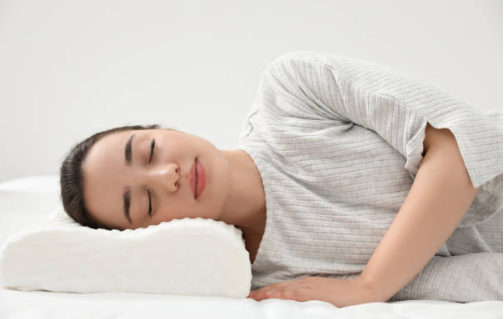
So if you’ve been struggling with sleep, don’t just blame your body clock. Check if your pillow has simply lived past its prime. A memory foam pillow B-type slow rebound household pillow can give you full-body comfort and proper spinal alignment, making it easier to regulate your sleep rhythm.
6. Mindset Shift: From “Forcing Early Sleep” to “Nurturing Your Sleep Environment”
Many people fail to reset their body clock because they use the wrong method:
Wrong way: Forcing yourself into bed at 10 p.m., only to lie awake until midnight.
Right way: First optimize your environment so your body naturally learns to sleep earlier.
That’s where memory foam pillows make sense: they reduce tension in the body, make sleep smoother, and allow early wake-ups—or earlier bedtimes—to feel more natural.
Conclusion: A Pillow Isn’t Magic, But It Can Be a Turning Point
The difference between early birds and night owls comes down to circadian rhythm and lifestyle pace. A pillow can’t change your schedule directly, but it can help you fall asleep faster and sleep deeper—both essential for resetting your body clock.
So next time you think about adjusting your routine, don’t just rely on alarms or sheer willpower. Start with your pillow—let your body and mind accept the signal: “It’s time to rest.”
After all, real change often starts with the small details.