Does your memory foam pillow get hard in winter? Simple tips to restore its softness.

Every winter, many people are surprised to find that their once soft and comfortable memory foam pillows suddenly seem to “firm,” making their necks and heads feel stiff when they lie down. Is the pillow broken? Or is it a quality issue with the memory foam? Actually, no—this is the memory foam’s natural reaction to the cold environment. This article will combine brand guidance, user experience, and scientific principles to help you quickly regain that soft feel, ensuring your pillow remains as comfortable as ever throughout the winter.
Not only that, but I will also share some tips so that you can have a soft, comfortable, and supportive sleep experience in winter without having to change your pillow frequently.
Why do memory foam pillows harden in winter?
First, we need to understand why the “hard pillow” phenomenon occurs in winter.
Temperature sensitivity of memory foam
Memory foam is a type of viscoelastic polyurethane, and its molecular motion increases or decreases with temperature changes.
- When the temperature is high, molecular activity is active, and the pillow becomes soft and gradually conforms to the curves of the head and neck.
- When the temperature is low, molecular activity slows down, the sponge reacts slowly, and the pillow will feel stiff and less elastic.
In other words, the fact that pillows harden in winter is a natural characteristic of the material, not a product quality issue.
Environmental factors
Besides temperature, environmental factors can also exacerbate this hardness:
- The room is too cold, especially the room without heating.
- It has not been used for a long time or has been placed near a window where cold wind blows directly.
- Uneven air humidity means that even though winter is dry, enclosed spaces may have localized dampness.
In summary, the firmness of memory foam pillows in winter is mostly temporary, and they can be fully restored to softness with the right methods.
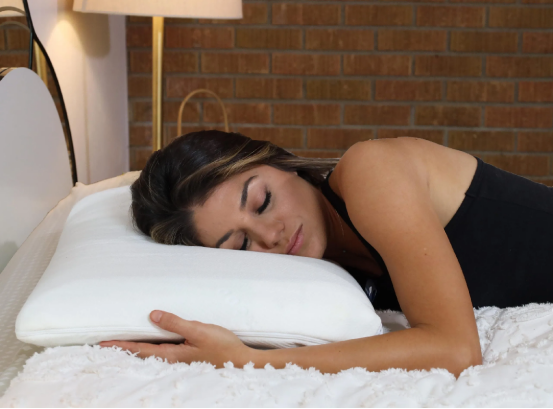
Memory foam pillow: winter softness recovery tips
The following are practical tips that have been proven effective by brands and users. You can combine them flexibly according to your lifestyle and room conditions.
1. Preheat the pillow to bring the foam to life.
- Place your pillow in a warm room 15–30 minutes before bedtime to allow it to gradually adjust to the room temperature.
- You can use a gentle heat source, such as a heater or a warm water towel (be careful not to expose it to direct sunlight or use a hair dryer).
- Give Pillow enough “rebound time,” and you’ll find that its softness recovers significantly.
Tip: You can gently pat the pillow a few times to redistribute the air inside, just like “warming up” the pillow.
2. Gently knead or press the pillow.
- Gently press and knead the pillow with both hands, especially the side you usually sleep on, to promote microcirculation inside the foam.
- Apply light pressure and release a few times, and the fit will quickly return to normal.
- Be careful to apply moderate pressure and avoid folding or prolonged heavy pressure to prevent damage to the internal structure.
3. Maintain a suitable room temperature and ventilation.
- An ideal room temperature is 18–24°C, neither too cold nor too hot, which helps the memory foam pillow maintain its elasticity.
- Avoid placing pillows near windows, on the ground, or where air conditioner vents blow directly on them.
- Adequate ventilation can prevent localized moisture buildup, making the pillow’s softness more consistent.
4. Use a suitable pillowcase
- The material of a pillowcase directly affects temperature and comfort: cotton, bamboo fiber, or warm and breathable materials are best.
- Avoid using fabrics that feel cold or are too thin, as these will exacerbate the stiffness in winter.
- A suitable pillowcase can also prevent sweat and sebum from entering the memory foam pillow, extending its lifespan.
5. Regularly pat or shake gently.
- Every few days, gently pat or shake your pillow to redistribute the air bubbles inside and avoid excessive pressure in any one area.
- It works well for memory foam pillows with broken sponge sponges, and it is also suitable for solid sponge pillows, but you need to be gentle.
- Avoid prolonged heavy pressure (such as using it as a pillow or placing it under the foot of the bed), as this will accelerate the aging of the foam.
6. Rotate to use; do not flip.
- Rotate your pillow 180° every few weeks to avoid putting too much pressure on one side.
- Most memory foam pillows are single-sided, with a soft top and a firm bottom, making them more suitable for single-sided use. Turning them over may affect the support.
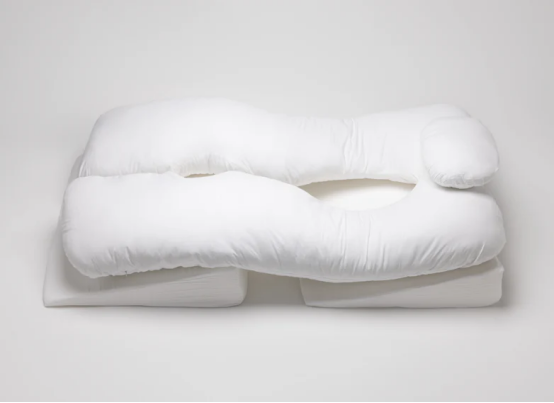
When should you consider replacing your pillow?
Even after using the above methods, sometimes the pillow still cannot regain its softness, which may mean that the pillow has truly aged.
- After 2–4 years of use, the cells inside the sponge may collapse or become fatigued.
- A stiff pillow over a long period of time can affect cervical spine support and sleep quality.
- At this point, replacing your pillow with a high-quality memory foam pillow is wiser than frequent maintenance.
Simply put, a pillow that is “hard in winter” is a temporary phenomenon, while a pillow that is “hard all season and does not bounce back” means it’s time to retire it.
Tips for using a memory foam pillow in winter
To ensure a comfortable sleep throughout the winter, try the following steps:
- Adjust the room temperature to 18–24℃ 30 minutes before bedtime.
- Let the pillow acclimate to the temperature on the bed or outside the pillowcase for 10–15 minutes.
- Before getting into bed, gently rub and pat your pillow to help the foam bounce back.
- Use breathable and warm pillowcases to reduce the feeling of cold.
- Pat/shake gently once a week or every few days to keep it soft.
- Rotate it 180° every few weeks to distribute the force evenly.
By following these steps, you can keep your memory foam pillow feeling snug and comfortable even in winter.
Why memory foam pillows are still a worthwhile choice
Many people worry that memory foam will harden in winter and affect comfort, but with proper care, its advantages remain obvious:
- It conforms to the curve of the head and neck, relieving pressure on the cervical spine.
- Slow-rebound material provides stable support and consistent performance throughout the year.
- Temperature sensitivity is controllable, and softness can be quickly restored through preheating and care.
In other words, temperature sensitivity is not a drawback but rather a reminder to take proper care of your memory foam pillow. Master the techniques, and your memory foam pillow can be as comfortable in winter as it is in summer.
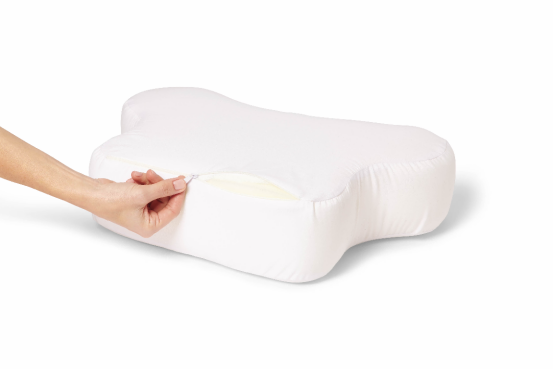
Summarize
- The memory foam pillow hardens in winter; this is a natural reaction of the material to low temperatures.
- Softness can be quickly restored by methods such as preheating, gentle kneading, using a suitable pillowcase, maintaining room temperature, patting and shaking gently, and rotating during use.
- If a pillow has been used for many years and its structure is damaged, it should be replaced to ensure sleep quality.
- With proper care, your memory foam pillow can provide comfort and support even in winter, allowing you to enjoy a good night’s sleep.
With these tips, you can still enjoy a soft, comfortable, and supportive sleep experience on cold winter nights, making every night’s sleep a small but precious joy.