Are memory foam pillows really suitable for people with scoliosis? Let’s start with sleep comfort.

Memory foam pillows have become almost synonymous with “neck protection” in recent years.
You may have seen them in advertisements or on doctors’ recommendation lists.
But if you have scoliosis, you might have one more question in mind:
- Is this kind of pillow really suitable for me to use long-term?
- Is it helping me, or is it just a temporary comfort?
To be honest, this is not a simple issue.
The sleep needs of people with scoliosis are inherently more complex than those of ordinary people.
This article will take a more realistic and human-centered approach, combining structural mechanics and real-world usage scenarios, to clarify
how to use a memory foam pillow to improve sleep comfort for people with scoliosis, rather than creating new discomfort.
Table of Contents
Why are people with scoliosis more likely to have trouble sleeping?
Let me start with a fact that many people overlook:
Scoliosis may not be painful, but it will almost certainly affect sleep.
The reason is not “how many degrees it is bent,” but that
the left and right sides of the body are no longer completely symmetrical.
When awake during the day, muscles can compensate actively.
But once asleep, the body relaxes, and almost only two things remain for support:
- Mattress
- Pillow
Among these factors, pillows are often the most underestimated variable.
Common problems include:
- One side of the neck is always tighter
- When I wake up in the morning, my head is tilted in a fixed direction.
- A dull discomfort in the upper back or shoulder area
- tossing and turning frequently in the second half of the night
These experiences are rarely due to “incorrect posture,” but rather to mismatched support.
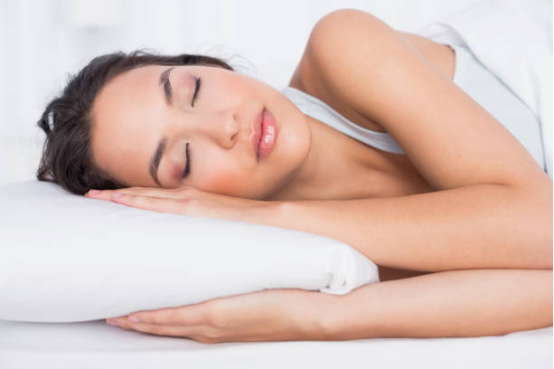
II. From a scientific perspective: What do people with scoliosis really need during sleep?
1. It’s not about “correcting,” but about “reducing the burden.”
This is a point that must be made clear first:
the memory foam pillow is not a medical device and is not intended to correct scoliosis.
It can really do three things:
- Reduce unnecessary stress
- Distribute pressure concentration points
- Make muscles relax more easily at night
This may sound “basic,” but it is actually very important for people with scoliosis.
2. Three core goals of sleep support
From a biomechanical perspective, people with scoliosis do not need absolute symmetry during sleep, but rather:
- Relatively neutral cervical spine position
- Stable rather than forced support
- Allowing space for body fine-tuning
If a pillow is too hard, too high, or too “shape-fixed,” it can easily backfire.
III. Why is the memory foam pillow mentioned repeatedly?
1. Memory foam is not “magical,” but rather “gentle.”
The value of a memory foam pillow lies not in its “high technology,” but in the fact that its material properties happen to hit a few key points:
- Slow rebound: It won’t rebound instantly and press against the neck.
- Fit: Follows the body’s curves, rather than forcibly shaping.
- Pressure dispersion: Reduces single-point pressure
For people with scoliosis, this “non-interventional” support method is actually safer.
2. The real reason why it is suitable for people with scoliosis
Many users describe a feeling as follows:
“It didn’t ‘align’ me, but I slept more easily.”
This is exactly the proper way to use a memory foam pillow.

IV. Actual Adaptation of Memory Foam to Different Sleeping Positions
How should someone with scoliosis who sleeps on their back use a memory foam pillow?
When sleeping on your back, a common problem is that your head tilts slightly to one side.
A suitable memory foam pillow typically has the following characteristics:
- medium and low altitude
- There is a gradual transition zone in the neck.
- The pillow surface should not be too firm.
The key is not to “correct the head tilt,” but to avoid the additional tension caused by the head tilt.
What should people with scoliosis who sleep on their side pay more attention to?
Sleeping on one’s side is very common among people with scoliosis, but it also causes the most problems.
There’s only one key point:
the height must be sufficient.
A suitable memory foam pillow typically exhibits the following characteristics:
- Medium to high height, filling the gap between the shoulders and neck.
- Medium to high density to prevent nighttime collapse
- The pillow surface is wide enough to reduce head slippage.
Many cases of discomfort when sleeping on one’s side are not actually caused by the side itself but by a pillow that is too low.
People with mixed sleeping positions actually face the greatest challenge in pillow design.
If you are the type of person who “sleeps with your head tilted forward and wakes up on your side,”
it is often difficult to find a pillow of a fixed height that will fit you well in the long run.
This type of person is more suitable for:
- Height-adjustable memory foam pillow
- Partitioned support structure
- Design with a slower surface rebound
A little flexibility actually makes it more comfortable.
V. Common Misconceptions about Using Memory Foam Pillows for People with Scoliosis
Myth 1: The more snug the pillow fits, the better.
Over-swaddling can restrict turning over and affect deep sleep.
Myth 2: Short-term comfort means you’ve made the right choice.
The actual assessment period is at least 2–3 weeks.
Myth 3: It must be asymmetrical.
In most cases, there is no need to deliberately “customize the bias.”
VI. A practical way to judge: Is this memory foam pillow right for you?
You can ask yourself three questions:
- Does your neck feel more relaxed when you wake up in the morning?
- Do you turn over in bed less often at night?
- Does it relieve neck and shoulder fatigue during the day?
If you are sure about two or more of these,
then this memory foam pillow is right for you.
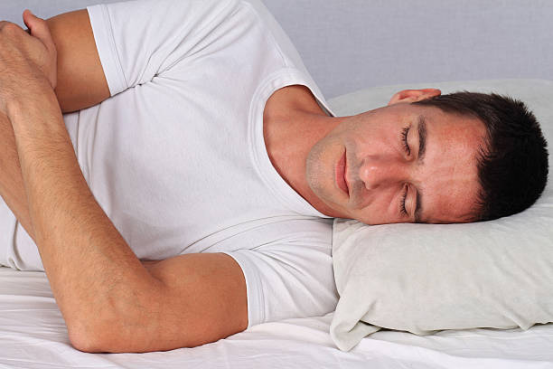
VII. FAQ: Common questions about memory foam pillows and scoliosis
Q1: Will memory foam worsen scoliosis?
No, Provided the height and density are appropriate.
Q2: Can it be used for adolescent scoliosis?
Yes, but avoid designs that are too high or too rigid.
Q3: Does it need to be replaced along with the mattress?
Not necessarily; the pillow is often a higher priority variable.
Q4: How long does it take to feel the changes?
Usually, you can feel the changes in sleep quality within 1–3 weeks.
In conclusion, memory foam provides long-term relief for people with scoliosis, rather than an immediate change.
Ultimately, a memory foam pillow isn’t the answer to scoliosis.
But it can reduce the extra stress on your body during 6–8 hours of sleep each night.
When the night is no longer a burden,
it is easier to stick to rehabilitation training and posture management during the day.
The value of a memory foam pillow is often underestimated if you consider it a gentle, long-term sleep support tool
rather than a “one-off solution.”