The compatibility of sleeping positions with memory foam pillows: a comprehensive breakdown of back sleeping, side sleeping, and semi-side sleeping positions.

In the sleep product industry, there’s a repeatedly proven fact: whether a pillow is suitable often depends on your sleeping position, not price or brand. This is
especially true for memory foam pillows, which have been heavily promoted in recent years and often described as “all-purpose pillows” or “neck support pillows.” However, the reality is that different sleeping positions require completely different levels of memory foam support.
Sleeping on your back, side, or semi-side—each posture alters the way your cervical spine is stressed, directly affecting whether a memory foam pillow truly provides support. This article will systematically analyze the compatibility logic between memory foam and different sleeping positions from three perspectives: sleeping posture, biomechanics, and material properties, helping you make the right choice for you.
1. Why does sleeping posture determine the effectiveness of a memory foam pillow?
From a medical and ergonomic perspective, the core goal of sleep is singular:
to allow the spine to remain as close as possible to its natural, neutral curve in a relaxed state.
The problem is—
- When sleeping on your back, the cervical spine needs to be supported but not pushed against.
- When sleeping on your side, the height of your shoulders creates a noticeable difference.
- Semi-side sleeping falls between the two, and its support needs are the most complex.
The advantage lies in:
- Slow rebound
- Pressure Dispersion
- Contouring
However, if the height, shape, density, and sleeping position are not matched, these advantages may become a burden.
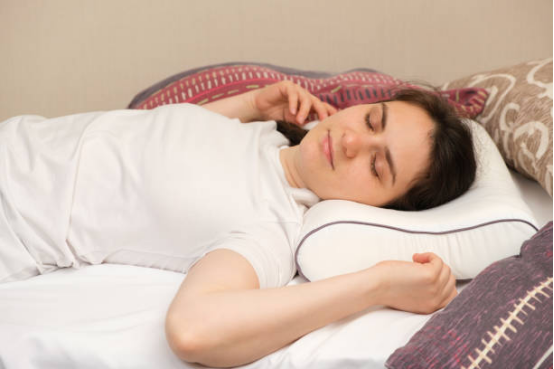
II. For those who sleep on their backs: Is a memory foam pillow really more comfortable?
1. The actual stress state of the cervical spine when sleeping on your back
When sleeping on your back, the weight of the head is mainly distributed backward. The cervical spine does not need to be “raised” but rather filled with support along the cervical curve.
If the pillow is too high, it can cause:
- Cervical flexion
- Continuous stretching of neck and shoulder muscles
- I felt noticeably stiff after waking up in the morning.
2. The advantages of memory foam pillows for back sleeping:
For back sleepers, the advantages of a memory foam pillow are mainly reflected in:
- Slow rebound can conform to the physiological curvature of the cervical spine
- Reduced pressure concentration points
- Greater head stability reduces nighttime awakenings.
Memory foam pillows, especially those with a medium to low height and a gentle slope for neck support, are more likely to help relax the cervical spine.
3. Key points for choosing a pillow when sleeping on your back
- Altitude: Low to medium
- Pillow type: slightly concave in the middle or with a neck support structure
- Hardness: Medium to soft but does not collapse
III. Side sleepers: The challenges and advantages of memory foam pillows
1. Why are side sleepers more selective about their pillows?
When sleeping on your side, there is a significant height difference in the human body:
the thickness of your shoulders plus the width of your head.
If the pillow can’t fill the space, problems will soon arise:
- cervical scoliosis
- Unilateral shoulder and neck pressure
- Frequent turning over at night
2. The actual performance of a memory foam pillow when sleeping on your side.
Compared to traditional cotton or down pillows, memory foam has two distinct advantages when sleeping on your side:
- It can form a stable support surface in the neck and shoulder area.
- Slow rebound speed, less prone to collapsing when turning over.
However, the prerequisite is that the height must be sufficient.
Memory foam pillows that are not high enough are actually less friendly to side sleepers.
3. Pillow selection suggestions for side sleepers
- Height: Medium-high or adjustable
- Pillow width: Sufficient to support the area close to the shoulders
- Density: Medium to high density, to prevent lateral pressure collapse.
For long-term side sleepers, the fit of a memory foam pillow depends heavily on its structural design, rather than a single material.

IV. Semi-side sleeping (mixed sleeping positions): The key group most easily overlooked
1. What is half-side sleeping?
Semi-side sleeping does not mean lying completely on your side, but rather:
- body slightly tilted
- The pelvis and shoulders do not fully overlap
- The head angle keeps changing
This is what many people think is sleeping on their back or side, but it is actually the most common sleeping position.
2. Special requirements for memory foam pillows for semi-side sleeping
The problem with sleeping on one’s side is
- Highly unstable demand
- The support points are constantly changing.
Regular, fixed-height pillows often fail to provide adequate support.
3. Advantages of memory foam pillows
For those who sleep on one side only, the following design is more user-friendly:
- Adjustable height structure
- Partitioned support memory foam
- Medium rebound speed to avoid “getting stuck.”
In this case, the “fit” of the memory foam pillow becomes an advantage rather than a limitation.
V. Common Misconceptions about Memory Foam in Different Sleeping Positions
Myth 1: The softer the memory foam, the better.
Memory foam that is too soft will continue to sink at night, causing the cervical spine to lose support.
Myth 2: One height is suitable for all sleeping positions
Unless it is an adjustable pillow, a fixed height is almost impossible to accommodate a variety of sleeping positions.
Myth 3: Short-term comfort equals long-term suitability
Memory foam pillows are often very comfortable for the first few nights, but the real test is the condition of your neck and shoulders after 2–3 weeks.
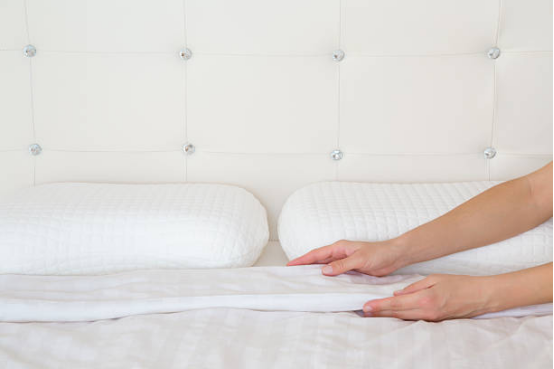
VI. How to choose the right sleeping position scientifically?
You can quickly determine this from three dimensions:
- Sleeping posture percentage: Which posture accounts for more than 60% of the time?
- Shoulder width and neck length: determine height range
- Nighttime turning frequency: determines the required rebound speed
In short:
- Sleeping on your back → Low to medium height + neck brace
- Side sleeping → Medium to high altitude + high density
- Semi-side sleeping → Adjustable + zoned support
VII. FAQ: Common questions about sleeping posture and memory foam pillows
Q1: Is memory foam suitable for people who frequently toss and turn?
Yes, but you should choose styles that don’t rebound too slowly and have an elastic transition on the surface.
Q2: Shoulder pain when sleeping on my side—is it a pillow problem?
In most cases, it’s because the pillow is not high enough, causing abnormal stress on the neck and shoulders.
Q3: Will a memory foam pillow restrict sleeping positions?
A poorly designed one will, but a high-quality product should support natural posture changes.
Q4: Do I need to prepare different pillows for different sleeping positions?
Not necessarily; an adjustable memory foam pillow can cover a variety of needs.
In conclusion: There is no “one-size-fits-all” pillow, only “the right sleeping posture + the right memory foam pillow.”
Based on extensive research and user feedback, it is not a perfect fit for everyone, but in terms of “sleeping position matching,” it does offer more room for adjustment than traditional pillows.
What’s truly important isn’t the “memory foam” label, but rather:
- Does it understand your sleeping position?
- Does it respect the curve of your cervical spine?
- Does it provide stable support throughout the night?
When your sleeping position is truly matched with a memory foam pillow, deep sleep and neck and shoulder relaxation often occur naturally.