Does your pillow always slip off your body when you sleep? Here’s the correct way to position a memory foam pillow.

Do you often toss and turn at night, only to wake up to find your head has slipped to the edge of the pillow, or even the pillow has rolled to the corner of the bed? This is especially common when using a memory foam pillow. Many people assume the problem lies with the quality of the pillow filling, but that’s not entirely true—pillow “drifting” is often the result of a combination of factors, including how it’s placed, the pillowcase, and your sleeping posture.
Table of Contents
Why does a memory foam pillow tend to slide?
1. The fit and resilience of memory foam
The memory foam pillow is made of slow-rebound foam that can slowly deform according to head and neck pressure and body temperature, conforming to the curves of the human body and providing support and pressure distribution.
This good fit is an advantage, but it also means that the friction between the pillow and the sheet is relatively low, making it easy for the pillow to slip when you turn over. This is especially true for new pillows, which have stronger resilience and a smooth surface, making them even more prone to slipping away.
2. Pillows require high support and positioning.
The shape, thickness, and height of a memory foam pillow are designed to match the height of the head, neck, and shoulders. If the pillow is placed at an incorrect position or angle, the head’s center of gravity will be unstable, and the pillow may easily slip out of place.
Simply put, head and neck support is closely related to the position of the pillow; even a slight deviation can cause the pillow to slip.
3. Sleeping position and pillow size do not match.
People who frequently sleep on their side or back or toss and turn are also prone to pillow slippage if they choose a pillow that is too small, too thin, or unsuitable for their shoulder width.
In addition, some people are used to stacking multiple pillows. In this case, when turning over, the layers of pillows slide against each other, which can cause the top layer of memory foam pillow to not keep up with the head movement.
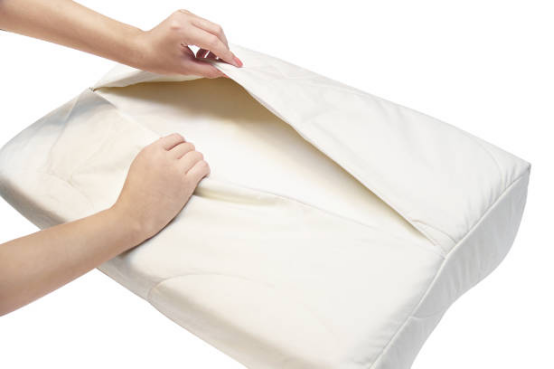
5 practical tips for proper placement
1. Adjust your pillow’s height, direction, and position according to your sleeping posture.
Different sleeping positions require different pillow heights and support levels.
- For supine sleepers: The pillow core is of moderate height, gently supporting the back of the head and neck, maintaining the natural curve of the cervical spine.
- For side sleepers: The pillow height should be similar to the shoulder width to ensure that the head and body are level and that the ear, shoulder, and hip are in a straight line.
Practical suggestions:
- When using it for the first time, lie flat and try sleeping to see if your head and neck are supported.
- If the pillow is too high, you can fold in a pillowcase or choose a thin memory foam pillow.
- If the pillow is too low, you can add a thin blanket or choose a thicker pillow.
The correct combination of “height + direction + position” is the foundation for preventing the head from slipping out or the pillow from shifting.
2. The pillow should be close to the shoulders and not placed on one side.
Many people like to place their pillows on the top or side, which shifts the center of gravity of their head and makes it easy for them to slip off.
Suggested approach:
- A pillow placed close to the shoulders or chest helps stabilize the head’s center of gravity, whether sleeping on your back or side.
- Avoid placing the entire pillow against the headboard or to the side of the bed to reduce the chance of the pillow slipping off.
A small adjustment to the placement can often solve the problem of a slippery bolster that has plagued people for years.
3. A well-matched pillowcase and bedding set reduces slippage.
While the pillow itself is important, the combination of pillowcase, sheet, mattress, and quilt can also affect the smoothness of the pillow.
Recommended approach:
- Choose pillowcases with a moderate coefficient of friction; overly smooth materials are prone to slipping.
- The pillowcase should fit well and not be loose so that the memory foam pillow is more stable.
- A flat mattress and taut, wrinkle-free sheets can reduce pillow movement when you turn over.
In other words, view the pillow as a “whole system,” rather than just a pillow insert.
4. Avoid stacking multiple pillows.
Stacking pillows may seem to increase height, but it actually makes pillows slip more easily.
reason:
- The pillows slide against each other when you turn over, resulting in unstable overall support.
- When the weight of the head changes, the top pillow layer will not bear the weight evenly and may be thrown away.
Recommendation: Use a memory foam pillow + a suitable pillowcase + proper placement for best stability.
5. For people who frequently roll over, assisted immobilization methods can be used.
If you frequently toss and turn at night, you can try the following methods:
- Place thick cushions or throw pillows near the headboard/side of the bed to protect the edges and prevent slipping.
- Choose a pillowcase or memory foam pillow with a non-slip bottom design.
- Before going to bed, tidy up your pillow by flattening the pillow core and tightening the pillowcase so that your pillow starts in the correct initial position every night.
These simple tips are very effective for “slippery pillow users.”
Additional influencing factors: Physical condition can also affect the bolster.
Besides the pillow itself and how it’s placed, your body habits can also cause the pillow to move:
- Neck or shoulder muscles are loose, and the center of gravity of the head and neck is unstable, especially in the elderly.
- Frequent tossing and turning at night, light sleep, cramps, or involuntary movements can cause the pillow to shift.
- If the pillow’s height and support are not properly matched, you will need to constantly adjust your posture, and it is also easy for the pillow to slip off.
If you belong to these types, you should pay more attention to implementing the first 5 placement tips.
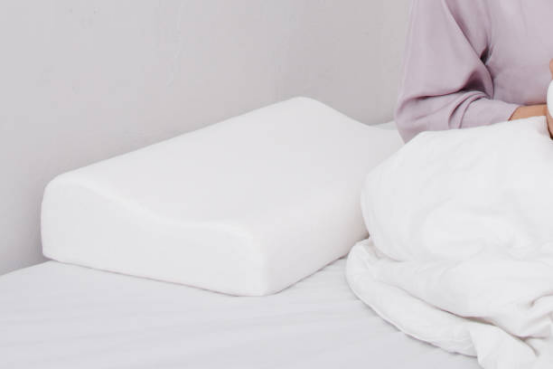
In summary: Keeping your memory foam pillow secure is simpler than you think.
The reason most people “slip out of their pillows while sleeping” is not because there is a problem with the memory foam pillow itself, but rather:
Improper pillow placement (position + height + direction)
Unstable matching of pillowcases and bedding
Sleeping position, tossing and turning habits, or body condition not matching the pillow
Key improvement measures:
- Adjust the height and direction of your pillow according to your sleeping position.
- The pillow should be placed close to the shoulders/chest, not off-center.
- A well-matched pillowcase and bedding set with a moderate coefficient of friction.
- I’ve given up the habit of folding pillows and now use only one memory foam pillow.
- If the child has been rolling over for a long time, you can add a cushion/edge protector/anti-slip design.
Remember: the value of a memory foam pillow lies in its shaping, support, and resilience.
If placed haphazardly, it’s like a “floating cloud pillow”;
if positioned correctly and securely, it can firmly support your head and neck, becoming your “sleep guardian.”