Feeling neck strain from prolonged computer use? How can a memory foam pillow relieve muscle fatigue caused by sitting for long periods?

For those who spend long hours staring at screens, typing, or working at desks, stiff neck and shoulders, a pulling sensation in the back of the neck, and even a feeling of dizziness in the afternoon… these may have become your daily companions. Sound familiar? Actually, these little signals are often reminding you that your cervical spine, muscles, and joints are quietly under pressure. However, the good news is that a suitable memory foam pillow is not only a companion when sleeping, but it can also help relieve neck tension during the day, making prolonged sitting less torturous.
I. The root cause of muscle fatigue from computer work: the “static exhaustion” you may not know.
1. Prolonged sitting + forward head tilt = cumulative load on the cervical spine
Have you ever noticed that when you’re working on a screen, you unconsciously droop your head and shrug your shoulders? When you tilt your neck forward, your cervical spine isn’t actually relaxing. Frankly, the head weighs about 4-5 kilograms, and this forward tilt puts extra pressure on the neck muscles, intervertebral discs, and ligaments. Over time, the muscles are in a state of continuous tension or strain, leading to soreness and stiffness.
Worse still, this “static load” is more damaging than you might imagine if you sit still for hours on end. Your muscles may even become fatigued before you realize it.
2. Muscle fatigue = weakened circulation + collapse of supporting structures
Tight muscles naturally restrict blood flow, leading to localized micro-oxygenation, lactic acid buildup, and stiffness. This is especially noticeable in the neck and shoulders: headaches, shoulder numbness, limited head movement… Sometimes, simply poor posture (such as a chair too low, a screen too high, or a keyboard too far away) can prematurely damage the cervical spine’s support. You might only feel neck pain without realizing that it’s actually the result of long-term imbalance in support.
3. Unstable sleep at night can also amplify daytime problems.
doesn’t provideDuring the day, the neck is strained, and if the pillow isn’t suitable or provides adequate support at night, the cervical spine has to continue working. This means that when you wake up the next day, the fatigue in your neck and shoulder muscles is compounded, creating a vicious cycle. Daytime and nighttime work form a closed loop. To break this loop, simply adjusting your posture isn’t enough; you also need to focus on the memory foam pillow and sleep support. Studies show that the appropriate pillow height and correct cervical spine alignment can truly relax the neck and shoulder muscles and reduce muscle activity potentials.
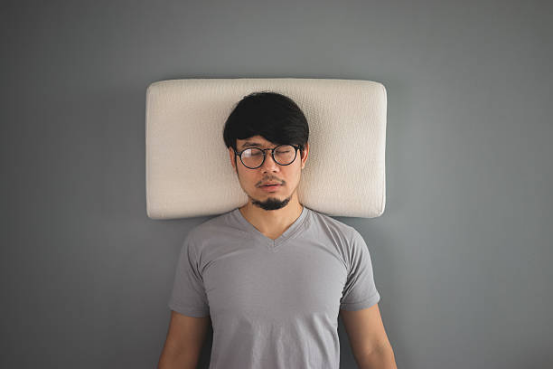
II. How does a memory foam pillow relieve muscle fatigue from prolonged sitting?
1. Fit and support = science, not gimmick.
Memory foam has a notable characteristic: it slowly rebounds when compressed, shaping itself according to body temperature and pressure to conform to your body’s curves. For those who spend long hours at an office, using this type of pillow can help maintain the natural curve of the cervical spine and relieve muscle tension caused by tilting the head forward. In other words, when using a conforming memory foam pillow at night, your neck muscles can get a stable rest, and when you wake up the next day, your neck won’t feel stretched and stiff.
2. More even support → more thorough release of muscle pressure
head pillowTraditional pillows tend to sag or bounce back too quickly, resulting in excessive pressure in certain areas. In contrast, memory foam pillows distribute pressure evenly across the head and neck, preventing muscles from becoming tense for extended periods due to certain “high-pressure points.” Using a contoured memory foam pillow head helps improve sleep quality and reduce neck pain caused by poor support.
In this way, muscles are less affected by “support breakage” at night, and fatigue from sitting for long periods during the day will naturally decrease.
3. Optimized sleep → Faster recovery during the day
If you feel like a zombie during the day, it’s mostly because you didn’t truly recover at night. A memory foam pillow helps maintain good cervical spine alignment, reducing nighttime muscle adjustments and tossing and turning, thus improving sleep quality. When you wake up, you’ll find your neck more relaxed, your shoulders lighter, and you won’t feel “instantly stiff” even after sitting for a long time. In other words, this pillow is actually your “invisible booster,” helping you perform more easily and comfortably in the office.
III. How to choose a memory foam pillow suitable for people who sit at a computer for long periods of time
1. Moderate height and support
A pillow that’s too high will cause the cervical spine to tilt forward and strain the muscles; one that’s too low will cause the head to tilt backward and provide insufficient support for the shoulders and neck. An ideal pillow keeps the cervical spine and spine in a horizontal line. For those who work with computers, a medium-height memory foam pillow with moderate support (firm but not hard) is most suitable.
2. Materials and breathability
Memory foam is great, but if it’s too stuffy and hot, it can cause sweating and tossing and turning at night, affecting recovery. We recommend choosing pillowcases with ventilation holes, a cooling layer, or a removable and washable cover.
3. Adjustable/replaceable pillowcase
The strain on the neck from prolonged sitting during the day doesn’t stop during sleep. Pillows that are washable, height-adjustable, or come with replaceable parts can ensure that the support doesn’t decrease significantly over long-term use.
4. Suitable for both office and sleep scenarios
,Many people only use pillows when sleeping, but if you want to get comfortable support during your lunch break or a short nap on the sofa after work, it’s best to choose a memory foam pillow that fits your sitting and lying postures , with a neck contour design and a moderate width, making it comfortable even when sleeping on your back.
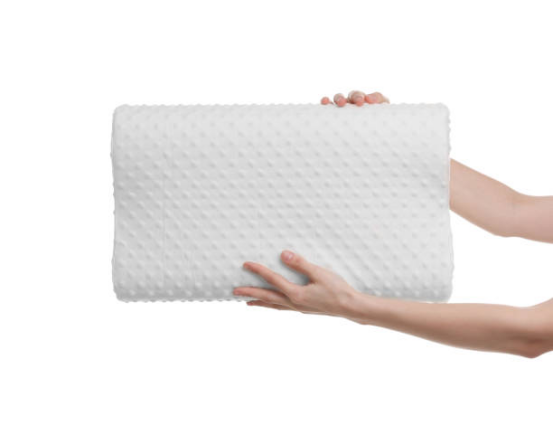
IV. Practical suggestions for computer users on daily use of memory foam pillows
- Prepare your pillow in advance: After work, lie on your pillow in your bedroom or on the sofa for 15–20 minutes to allow your neck muscles to relax.
- Rebound before sleeping: The memory foam material may flatten slightly after unpacking or placing it in the box. Let it “breathe” for a few minutes before sleeping.
- Wash your pillowcases regularly: Sitting for long periods can cause oil and sweat buildup in the neck, and not changing your pillowcases can affect comfort and support.
- Combined with daytime micro-activities: During lunch breaks or work intervals, perform a few head and neck tilts and shoulder relaxation exercises to enhance the pillow’s fatigue-relieving effect.
- Regularly assess the condition of your pillow: Although memory foam is durable, it should be replaced if it shows significant sagging or loss of support.
V. Conclusion: Why you should consider a memory foam pillow if you’re sitting in front of your computer.
When you sit in front of the computer every day, your neck and shoulder muscles are actually accumulating fatigue quietly. It won’t make you feel pain immediately, but it will make you wake up early, feel heavy-headed, and have difficulty turning your head. At this time, the pillow you use for sleeping actually becomes the “last line of defense for your body to recover.”
A suitable memory foam pillow not only provides excellent support at night but also cushions the muscles from daytime strain, allowing you to reduce daytime fatigue and maximize nighttime recovery. Instead of just standing up or leaning against a backrest to help you stay comfortable while sitting at a computer, using this memory foam pillow allows you to actively repair and reset your body’s state at night.