How can I determine if a memory foam pillow is ergonomic?

better?” When you’re tossing and turning and can’t find a comfortable pillow, you might think: what if a memory foam pillow were better? However, not all memory foam pillows are ergonomic. Today, we’ll teach you how to determine if a pillow truly “fits the curves of the human body” from multiple perspectives, including shape, support, and sleeping posture, to help you improve your sleep quality.
I. Why are ergonomic pillows so important?
gimmick butErgonomic pillows are not a gimmick, but a product of scientific design. They allow the head, neck, and shoulders to maintain their natural curves, reducing muscle tension.
- Neck support: Avoid prolonged periods of looking down or using high pillows, which can cause unnatural curvature of the cervical spine.
- Neck and shoulder relaxation: The pressure on the shoulders is evenly distributed, making them less prone to stiffness or soreness.
- Blood circulation: Scientifically designed to help blood flow at night, improving numbness in the arms or shoulders.
A friend of mine switched to an ergonomic memory foam pillow and found that his neck and shoulders were noticeably more relaxed when he woke up in the morning. It even relieved a long-standing problem of stiff neck in the morning that he had suffered from for many years. The feeling was very noticeable.
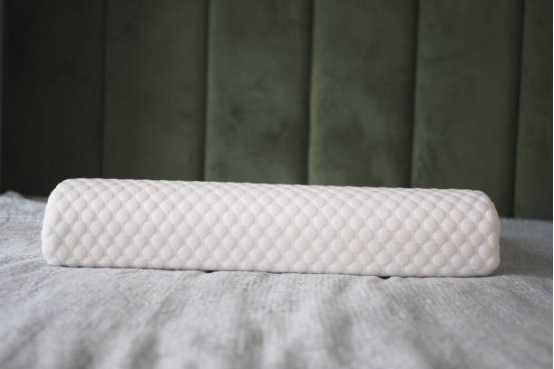
II. Six Standards for Judging Whether a Memory Foam Pillow Meets Ergonomic Standards
1. Pillow shape and outline
A good ergonomic pillow usually has a wave-shaped or neck-concave design, which conforms to the curve of the cervical spine and supports the head.
- Wave-shaped: Suitable for those who sleep on their back or side, it supports the natural curvature of the cervical spine.
- Butterfly or neck support type: suitable for side sleeping, with a closer fit between the shoulder and neck.
Tip: If the pillow is flat and looks like an ordinary cotton pillow, it may not meet ergonomic requirements.
2. Memory foam density and firmness
- Density: Low density is soft but offers weak support; medium density (4-5 PCF) is suitable for most people; high density offers strong support but offers slow rebound.
- deeply,Firmness: The pillow should not be too soft, otherwise the head will sink too deeply; nor should it be too firm, otherwise it will not fit well.
Experience sharing: I’ve tried low-density pillows, which are very comfortable to lie on at night, but my neck is stiff in the morning. Medium-density memory foam pillows are significantly better.
3. Pillow height
The height determines whether the cervical spine is naturally aligned.
- For those who sleep on their backs: the chin and forehead should be roughly level to avoid tilting the neck forward.
- Side sleepers: Fill the gap between the shoulder and head to keep the cervical spine level.
The height-adjustable memory foam pillow is best suited for tall people or people with different shoulder widths, as it can be flexibly adjusted to find the most comfortable support point.
4. Breathability and temperature regulation
Memory foam conducts heat slowly and has poor breathability, making it prone to feeling stuffy. Ergonomic pillows are typically designed with:
- Ventilation holes: The pillow core is breathable, reducing stuffiness.
- Gel layer: helps dissipate heat and prevents sweating from the head and neck.
onmemory foam pillow with poor breathability, and I could barely sleep in it during the summer. After switching to a breathable design, my sleep comfort improved significantly.
5. Pressure distribution and supporting force
- Memory foam is characterized by “slow rebound,” which can distribute pressure on the head and wrap around the head and neck.
- Whether you sleep on your back or side, you can maintain support and avoid discomfort from localized pressure on your shoulders and neck.
- Reduce muscle tension and avoid waking up with neck and shoulder pain in the morning.
6. Durability and Deformation Recovery
- A good pillow retains its support even after long-term use and is not prone to collapsing.
- The rebound speed is fast and uniform.
- Maintain cervical spine support and ensure the pillow truly conforms to ergonomics.
III. Practical Method: Test the Pillow’s Ergonomics Yourself
Neck alignment test
- Lie flat on your back and let your head and shoulders relax naturally.
- Observe whether the curve of the neck is natural.
- If the neck is unsupported or noticeably flexed forward, it indicates that the pillow’s height or shape is unsuitable.
Stress perception test
- Lie down for 5–10 minutes, and pay attention to whether you feel any pressure in your shoulders, neck, or head.
- A high-quality memory foam pillow will make you feel “gently wrapped” rather than uncomfortable from being pressed down.
Breathability test
- After sleeping overnight, observe whether you feel stuffy and sweaty.
- If the stuffiness is noticeable, the ventilation design may be inadequate.
Durability test
- Press the pillow with your hand and observe how quickly it recovers.
- Slow elasticity and obvious collapse indicate that memory foam has insufficient resilience.
IV. How to Choose a Suitable Memory Foam Pillow
- Height adjustable: adaptable to different sleeping positions and shoulder widths.
- Medium density: Medium density is the most balanced, taking into account both softness and hardness.
- Well-defined contours: a wavy or concave neck shape provides good support.
- Breathable design: dissipates heat and provides ventilation, making it comfortable even in summer.
- High durability: It maintains its support and will not deform even after long-term use.
- Tip: Before choosing a pillow, measure your shoulder width and neck length. Using an adjustable pillow will make it more comfortable.
V. Daily Use and Maintenance Recommendations
- Air dry: Avoid moisture to prevent memory foam from deforming.
- Replace regularly: generally every 2–3 years to maintain support.
- Cleaning and care: Avoid soaking in water; simply wipe gently or vacuum.
VI. Conclusion
To determine whether a memory foam pillow is ergonomic, the key factors to consider are its shape, density, firmness, height, breathability, support, and durability.
- This can be verified through cervical spine alignment, pressure sensation, breathability test, and elasticity test.
- Choosing the right ergonomic pillow can not only reduce neck and shoulder pressure but also improve overall sleep quality.
- A high-quality, height-adjustable memory foam pillow truly balances comfort and health, ensuring a peaceful night and a relaxing morning.
Investing in a suitable memory foam pillow is actually investing in your health and sleep experience. A small pillow, a big difference.