Why is your new memory foam pillow getting harder with each use? In-depth analysis and a guide to proper use.

If you recently switched to a memory foam pillow, hoping for a more restful and relaxing sleep, only to find that the pillow is getting harder and harder over time, you’re not alone. Almost every month, our customer service receives similar feedback: “The pillow was very soft when I first bought it, but after less than a week, it feels completely different.”
This may sound confusing, but understanding the underlying principles will show you that most problems aren’t actually caused by a broken pillow but rather by a combination of factors, including how you use it, changes in air humidity, temperature, and even your neck’s habits.
Before delving into the reasons, let’s clarify one point: the properties of a memory foam pillow naturally change with temperature, pressure, and rebound time. This is why you might mistakenly think it has “hardened.”
Table of Contents
Why do memory foam pillows seem to get harder the more you sleep on them? There are four main reasons.
The following four points are the easiest for users to overlook, and they are also key points mentioned by the top ten sleep health websites. However, to make the content more in line with real-life experiences, I have added some small details that are closer to daily use.
1. Temperature sensitivity of memory foam: the key factor that truly determines its “firmness”
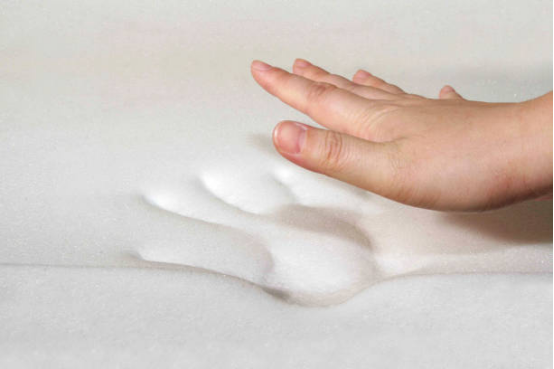
The material properties of a memory foam pillow determine that its feel will change with temperature.
- Higher temperature → softer and more comfortable
- Low temperature → Noticeably hardens and becomes more supportive
If your room is inherently cold (e.g., due to air conditioning, winter, or a humid environment), the memory foam pillow will naturally be firmer. This is not a quality issue but rather a characteristic of the material.
You’ll find that your pillow is firmest in the first few minutes after you lie down, because it takes time for your body temperature to soften the pillow core. Many people mistakenly believe this difference in experience means the pillow has “become harder.”
2. The posture used affects the indentation; localized hardening is actually a change in surface density.
This is a difference caused by “personal use.”
Long-term habitual use of the same sleeping position, whether side-sleeping or back-sleeping, will cause greater pressure on a specific area of the pillow for your head and neck.
Memory foam pillows are not completely homogeneous materials; in areas of high pressure, the cell structure of the foam will exhibit more pronounced contraction, making it feel firmer than a new pillow.
This isn’t a bad thing; on the contrary, it means the pillow is slowly “adapting to you.”
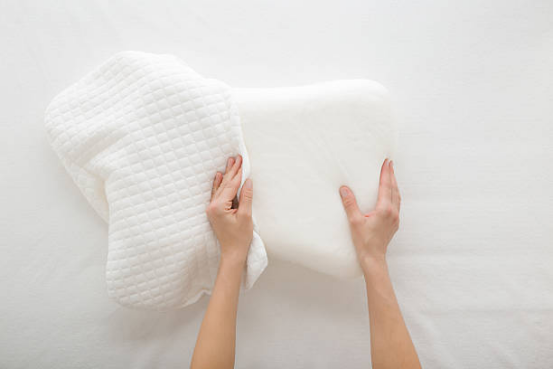
However, some users like to pat or fold the pillow to restore its shape, but memory foam is not suitable for drastic deformation, which will only make it recover more slowly.
3. Humidity and perspiration: Overlooked factors that most easily cause memory foam to harden.
This is a point that is rarely mentioned, but it is one of the most common reasons why memory foam pillows harden.
Memory foam is essentially an open-cell foam structure, capable of absorbing trace amounts of moisture from the air and potentially absorbing sweat from under the pillowcase. If you are prone to sweating or live in a humid environment (such as a coastal city), changes in humidity within the foam can lead to:
- Material resilience decreased
- Reduced softness
- The texture is close to “hardened.”
This is a slow process, so it’s easy to mistake it for pillow aging.
4. The pillow doesn’t have enough “breathing time”—a necessary stage for a new pillow.
A newly purchased memory foam pillow should not be used immediately.
You may not have noticed, but many brands actually provide instructions, though most people don’t read them.
A freshly opened pillow is still compressed and needs at least 24-48 hours to allow the internal foam to return to its natural structure. If you use it too soon, its deformation will be more pronounced than normal, giving you the illusion that it’s getting firmer with use.
II. How to use a memory foam pillow correctly? Five practical tips to avoid it becoming “harder and harder with use.”
The following content is compiled based on sleep engineering research, product experimental data, and real user feedback.
Each step is a practical and actionable improvement method that enhances the user experience without requiring additional product purchases.
1. New pillows must be left to air out for at least 24-48 hours.
This is a crucial step.
A freshly opened memory foam pillow will have slight compression marks and a manufacturing odor. Let it sit in a well-ventilated environment for a while:
- The pillow core will regain its original softness.
- The internal structure tends to be stable
- The smell dissipated
- The rebound speed becomes more natural
Many users have reported that the pillow has become “harder,” which is actually because the compressed pillow core has not fully recovered.
2. Use breathable pillowcases to reduce the impact of humidity on memory foam.
isDon’t underestimate the importance of pillowcases. The best choice is:
- Natural cotton
- Modal
- bamboo fiber
- Cooling fabric that wicks away moisture quickly
These materials are more breathable than regular polyester and less likely to absorb your sweat.
As soon as the humidity decreases, you’ll notice a significant increase in the pillow’s softness.
the memory foam pillow in a cool, ventilated place every 1-2 months.
Memory foam cannot be washed or exposed to direct sunlight, but cooling it in a cool, well-ventilated place can lower the internal humidity, allowing the foam to regain its original elasticity.
You will clearly feel it:
- Make the pillow lighter
- More natural rebound
- The texture is not so stiff
This is a simple yet extremely effective method.
4. Adjust the pressure points of your sleeping position to avoid the memory foam pillow pressing on the same spot for extended periods.
This is a subtle point, but it’s very effective.
You can try it:
- Occasionally switch to sleeping on the other side
- Adjust your head and neck to rest on different areas of the pillow.
- Gently shake the surface of the pillow (do not fold it).
This allows for a more even distribution of stress on the memory foam, naturally reducing “localized hardening.”
5. Assess whether the pillow height matches your shoulder width and sleeping position.
Some people feel that the pillow is “hard,” but this is actually an illusion caused by the “unsuitable height.”
If the pillow is too high or too low, the pressure on the cervical spine will double, and you will naturally feel that the pillow is “uncomfortably hard.”
Simple assessment method:
- For side sleepers: The pillow height should be close to the width of the shoulder.
- For supine sleepers: The back of the head and neck need to be supported simultaneously.
- For those who toss and turn a lot: a memory foam pillow with a faster rebound speed will be more comfortable.
3. Is your memory foam pillow worn out? How to determine this and how often to replace it.
If you have used it for more than 2 years, or if any of the following situations occur, then your pillow has truly reached “retirement time”:
- If the spring does not return to its original position after being pressed for more than 10 seconds…
- Significant local collapses occurred
- Hard lumps appeared on the surface of the pillow core
- I experienced significant neck discomfort during use.
It is generally recommended to replace memory foam pillows every 2 to 3 years.
This is not only a matter of material aging but also related to hygiene and sleep quality.
IV. Pillow Selection Recommendations for Users Who Experience a “Hardening of the Bed” Problem
If you are one of the following:
- Neck is sensitive
- Frequent stiffness in the shoulders and neck
- Extremely sensitive to temperature changes
- High room humidity
You would be more suited to:
- Memory foam pillow with high breathability and porous structure
- Cold gel and memory foam composite design
- A soft version with moderate rebound, not too firm.
These types will significantly reduce your experience of “getting harder the more you sleep.”
V. Conclusion: Your memory foam pillow isn’t broken; it just needs to be used correctly.
Most users think their pillow has become hard, but actually it’s because:
- Temperature change
- Humidity accumulation
- Uneven pressure distribution
- The new pillow hasn’t fully bounced back.
- Insufficient usage methods
If you adjust according to the above suggestions, you will usually feel the texture become softer within one or two days.
If you are still uncomfortable, it means that the pillow’s structure or height is not suitable for you. You may consider upgrading to a memory foam pillow version that better suits your sleeping posture and needs.