A brief history of sleep culture: from industrial society to the age of mindfulness

From the Industrial Revolution to modern cities, sleep has gradually shifted from a mechanical routine to a focus on quality and mental-body balance. In the past, people woke up to factory bells; today, mindfulness and health concepts make sleep a crucial part of self-regulation.
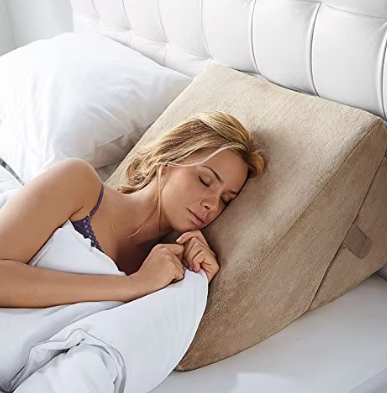
The emergence of memory foam pillows further aligns with this trend, scientifically supporting the cervical spine and relieving pressure, allowing for true relaxation and high-quality sleep every time you fall asleep.
Whether it’s a full night’s rest or a short nap, it helps you restore energy and prepare for a new day.
From steam to electric light: Industrial society makes people forget to sleep
The Industrial Revolution of the 19th century gave humanity its first real control over the rhythm of day and night.
The advent of electric light disrupted the natural rhythm of sleep and rest, allowing factory machines to run without stopping and extending human working hours indefinitely.
Back then, “sleep less, work more” became a virtue. The more late-night workers stayed up, the more dedicated and driven they seemed.
But what was the price? — physical exhaustion and mental fatigue.
Workers, businessmen, white-collar workers, and even scholars were all vying for sleep.
Back then, the bed was merely a place to rest, far from comfortable, much less ergonomic.
People’s pursuit of sleep was limited to ensuring sufficient sleep.
Mid-20th Century: The Modern Sleep Revolution
After World War II, economic recovery brought about a consumer culture, and people began to pursue a more comfortable home life .
At this time, sleep was included in the category of “quality of life” for the first time.
1. A bed is no longer just a bed
Mattress brands have emerged, emphasizing functions such as “support,” “softness,” and “moisture-proof and breathable,” and bedrooms have also been transformed from simple rest areas into private relaxation spaces.
2. Science enters the bedroom
In the late 1950s, scientists discovered rapid eye movement (REM) sleep , the birthplace of dreams .
From then on, people first realized that sleep is not a passive “shutdown” but a process of “restarting” the body and brain.
3. The Evolution of Pillows
This period also gave rise to the emergence of some new pillow materials, whose properties completely changed people’s perception of “sleep comfort.”
Post-industrial era: the contradiction between overtime culture and the age of insomnia
Entering the 21st century, information technology and globalization have accelerated the pace of life again.
We have better beds, but it is more difficult to fall asleep.
Cell phones, computers, coffee, and stress—these hallmarks of modern life—have made insomnia the new normal.
In cities where overtime is prevalent, many still adhere to the “less sleep, more income” logic.
But at the same time, another wave of reflection is emerging—people are beginning to realize that poor sleep is the most expensive price.
Research shows:
Sleeping less than one hour a night can reduce concentration by about 20%.
Long-term lack of sleep can significantly increase the risk of anxiety, obesity, and cardiovascular disease.
It even affects creativity and emotional management.
As a result, sleep is no longer a “waste of time” but is redefined as a source of productivity.
The arrival of the mindfulness era: Sleep becomes a form of “self-care.”
In the era of mindfulness and health awareness, sleep has been given the meaning of emotional healing and psychological reconstruction.
1. From “wanting to sleep” to “wanting to sleep”
People no longer regard sleeping as a task but as a ritual: adjusting the lights, lighting aromatherapy, listening to white noise, changing into soft bedding… These details constitute a personal “sleep ritual.”
2. Physical comfort becomes the core
Modern people are paying more and more attention to the experience of physical relaxation.
In this context, the emergence of memory foam pillows just responds to this demand.
It is not just a pillow but more like a “body support ritual.”
Strong support: The special design provides precise support for the back, neck and legs, helping each part find a comfortable and relaxing angle.
Memory foam material : can sense body temperature and pressure and conform to body curves.
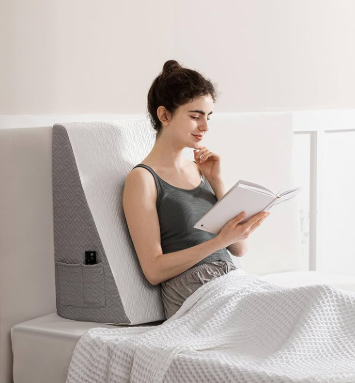
Multifunctional scenarios : Whether reading, watching TV series, taking a nap or recovering from surgery, it can provide stable support.
The emergence of this “humanized sleeping tool” has made “lying flat” no longer just a mental joke but a real physical repair experience.
Technology and Sleep: When “Intelligence” Meets “Relaxation”
Today, sleep is no longer just about closing your eyes and falling asleep.
We have smart bracelets, sleep tracking apps, and temperature-controlled mattresses—technologies that help us understand our sleep quality and remind us to relax.
Interestingly, the more people value technology, the more they crave a return to the most natural ways of relaxation.
Therefore, “no technological interference,” “intuitive body awareness,” and “slow sleep” have become new trends.
Start using a bed wedge memory foam pillow for a more direct relaxation experience. It helps relieve stress and provides a sense of security more effectively than smart devices.
When you lean against it, whether sitting, lying down, reading, or playing games, you feel a warm embrace—a sense of psychological comfort sorely lacking in our fast-paced lives.
Frequently Asked Questions about Pillows (FAQ)
Q1: Are memory foam pillows comfortable?
Yes, the core advantage of memory foam lies in its fit and support.
It deforms according to your body temperature and pressure, preventing the cervical spine from being suspended or compressed, allowing the head and neck to relax naturally.
Wedge-shaped triangular pillows, in particular, provide support for both the back and legs, helping to improve sleeping posture and breathing.
Q2: Can the triangular pillow be used daily?
Absolutely. It not only provides support while sleeping but can also be used for reading, resting, and napping. It’s a versatile, comfortable, and practical pillow.
Q3: Will memory foam get too hot?
High-quality memory foam pillow is often paired with a breathable cover material to effectively dissipate heat.
If you’re easily susceptible to heat, consider a model with a removable, washable, breathable cover, which is more suitable for summer use.
Q4: How to clean and maintain?
The memory foam pillow body cannot be machine washed and should be placed in a ventilated place to dry; the cover part can be removed and washed to maintain hygiene.
Summary : Let “good sleep” become your life philosophy
The evolution of sleep culture is actually a history of human self-awakening.
From passive rest to active care, we have learned to respect the rhythm of the body and rediscover the way to get along with ourselves.
When the lights go out late at night, lean back on the soft bed wedge memory foam pillow and let your body slowly unload its burden.
You’ll find that sleep is not just a way to end the day but also the starting point for a vibrant tomorrow.
Give yourself a chance to have a good sleep—because resting does not mean stopping, but starting better.