How to Choose a Memory Foam Pillow? Full Guide to Wedge Triangular Pillows vs. B-Shaped Slow-Rebound Pillows

When buying a pillow, a lot of people think: “Just grab a soft one, that’ll do.”
But once you actually use it, you’ll realize — some pillows leave your neck sore after one night, some can’t support your head properly, and some lose their shape after just a few months.
Memory foam pillows sound fancy, but here’s the thing — there are several different types. The shape, height, and function all vary, and the sleeping experience can be totally different.
Today, let’s break down the differences between wedge-shaped memory foam triangular pillows and B-shaped slow-rebound pillows — and figure out which one fits you best.
I’ll also answer a question many people ask: How long can a memory foam pillow last?
1. First — What Exactly Is a Memory Foam Pillow?
Before comparing them, let’s get the basics straight.
Memory foam — also called slow-rebound foam — is a type of high-density sponge that molds to the shape of your head and neck, then slowly springs back.
Pros:
Great support and contouring
Reduces neck pressure
Holds its shape better than regular pillows
Cons:
Can be less breathable (though newer designs often have ventilation holes to fix this)
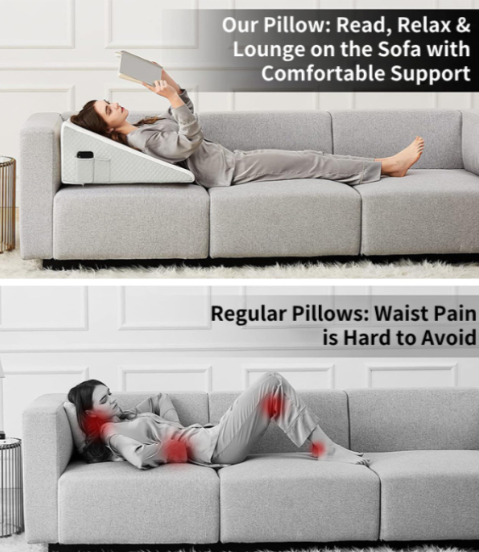
If you like to lie down and browse your phone, or if you have a bad stomach and are prone to acid reflux, this Bed Wedge Memory Foam Pillow Triangle Pillow is really your ideal type, and the memory foam material has good support and will not collapse.
2. Two Common Memory Foam Pillow Types Compared
1) Wedge-Shaped Memory Foam Triangular Pillow — The “Half-Lying Champion”
This pillow looks like a big slope. Place it on your bed, and you can relax in a semi-reclined position.
Best for:
People who love lounging in bed watching TV or scrolling on their phone
Those with acid reflux or snoring issues (semi-upright posture helps)
Post-surgery recovery or pregnant women who need an elevated sleeping position
Pros:
Adjustable height, large support area covering your back and neck
Works as a backrest, nap pillow, or even for sleeping
Supports your whole upper body
Cons:
Bulkier than regular pillows, takes up space
If you’re used to lying completely flat, it might take some getting used to
Tip:
If you love lounging in bed, often experience acid reflux, or just want a comfy “TV-watching” pillow, the wedge-shaped memory foam triangular pillow is a dream choice. Memory foam ensures it won’t flatten out easily.
2) B-Shaped Slow-Rebound Memory Foam Pillow — The “Neck Protector”
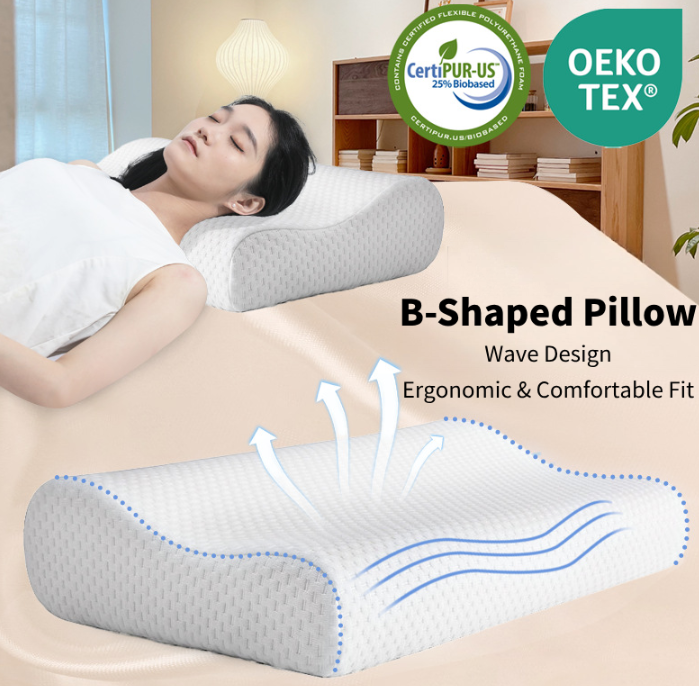
The B-shape means the center is lower while the sides are slightly higher, following the curve of your neck.
Best for:
People with neck discomfort
Back and side sleepers
Anyone who often wakes up with a stiff neck
Pros:
Center dip cradles your head, higher sides support your neck
Excellent contouring to reduce neck strain
Works for both side and back sleeping
Cons:
If you like super-soft pillows, you might find it a bit firm
New pillows may have a light memory foam smell (just air it out)
Tip:
If you often wake up with neck stiffness or suffer from cervical spine issues, go for a Memory foam pillow B-type slow rebound household pillow. Its ergonomic curve is designed to relieve neck pressure.
3. Core Differences at a Glance
| Pillow Type | Main Function | Best For |
| Wedge Triangular Pillow | Semi-reclined support, acid reflux relief | Loungers, reflux sufferers, pregnant women, post-surgery recovery |
| B-Shaped Pillow | Neck pressure relief, ergonomic sleep support | People with neck pain, back & side sleepers |
4.How long should a memory foam pillow last?
A common question: “How many years will this last?”
In general:
High-quality memory foam pillows (high density) can last 3–5 years
If well-maintained, they can even last longer
Cheaper, low-density ones may lose shape in 1–2 years
Tips to make it last longer:
Always use a pillowcase to reduce sweat and dust contact
Air it out regularly, but avoid direct sunlight (heat can damage foam)
Don’t fold or compress it for long periods
5. How to Choose the Right Memory Foam Pillow
Choose by shape & need:
For lounging / reflux relief → Wedge triangular
For daily neck support → B-shaped slow-rebound
Check foam density & rebound speed:
Higher density = more durability
Ideal rebound time: 3–5 seconds
Check the height:
Men: 10–12 cm
Women: 8–10 cm
6. Final Thoughts — The Right Pillow Means Better Sleep
There’s no such thing as a “one-size-fits-all pillow” — only the pillow that works for you.
Bed Wedge Memory Foam Pillow Triangle Pillow: Perfect for lounging, reflux relief, pregnancy, or post-surgery recovery.
Memory foam pillow B-type slow rebound household pillow: Perfect for daily neck care and ergonomic sleeping posture.
If your budget allows, you can even mix and match — use a B-shaped pillow for sleeping, and a wedge pillow for reading, watching TV, or afternoon naps. Trust me, your comfort level will skyrocket.
Pro tip:
If you’re upgrading your pillow, go for a high-density Bed Wedge Memory Foam Pillow Triangle Pillow or a Memory foam pillow B-type slow rebound household pillow. They won’t just make sleeping more comfortable — they’ll last you years, and your neck and back will thank you.